Realistic expectations for self-sufficiency
Becoming self-sufficient with solar is not about cutting the cord to the grid. It's about covering a large part of your electricity consumption with your own production while maintaining a connection to the grid as a backup.
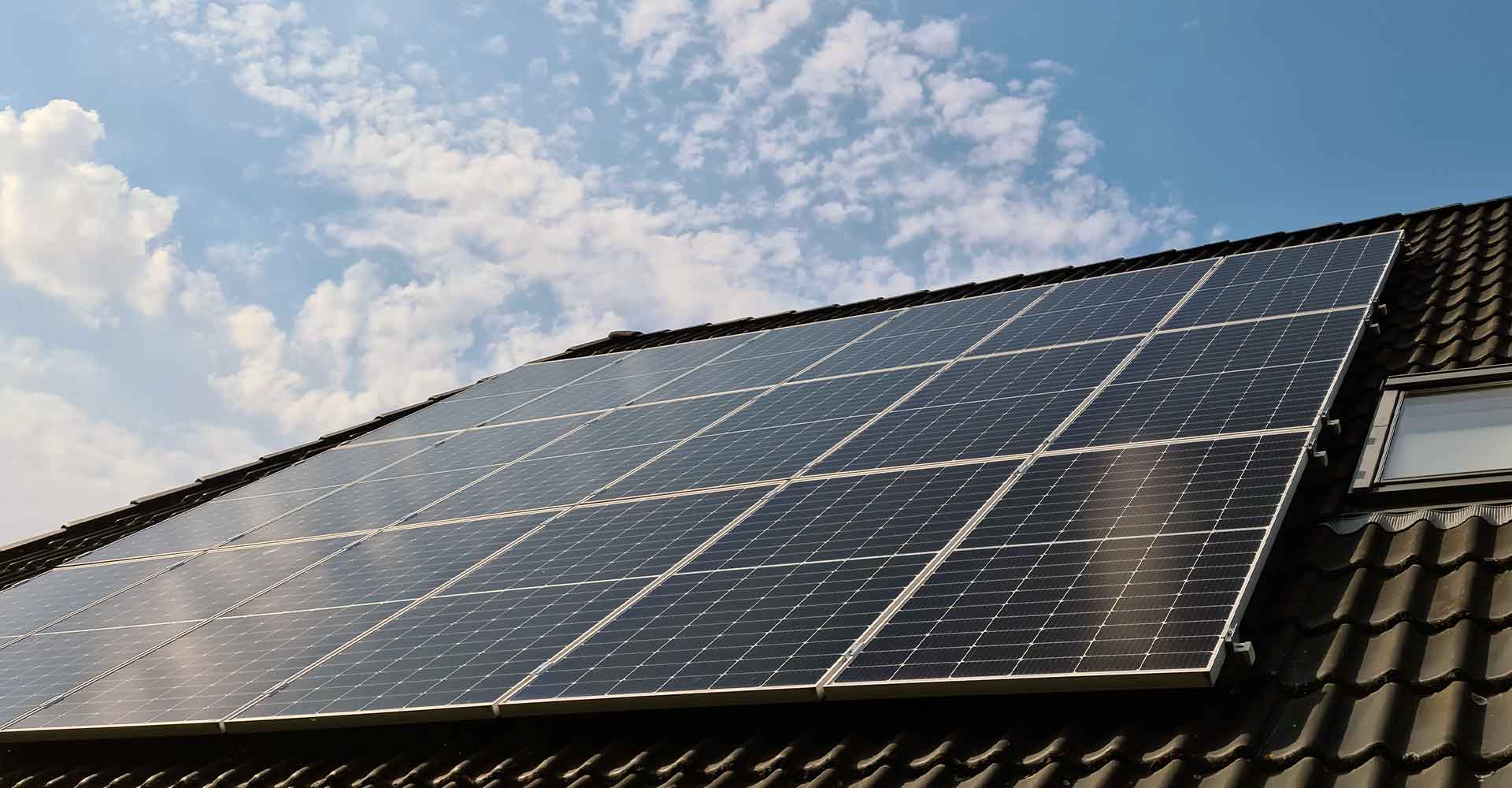
A photovoltaic system on your roof produces power when the sun shines. The challenge? The production rarely matches your actual consumption hour by hour. Solar panels produce the most power in the middle of the day, when many families are at work and school. In the evening, when everyone is at home and consumption peaks, the solar panels stand still.
This shift between Production and consumption is crucial to understand if you want to be self-sufficient with solar panels in Denmark. In the summer, the system often produces more than the household uses. The winter months, on the other hand, provide minimal production, even though the heating demand increases.
Sizing according to your actual consumption
The size of your PV system should reflect your actual consumption pattern throughout the year to maximise energy savings. Before choosing a system, you should analyse your hour-by-hour consumption over an entire season. Most energy suppliers provide access to this data through their customer portals.
Danish households typically have two distinct peaks in the day: in the morning when the family is travelling and in the evening when everyone is at home. In between these periods, consumption is low - exactly when solar panels are at their peak. This shift explains why many people find that their systems produce plenty during the day, while they still buy power in the evening.
To choose the right system size, you need to know your total annual consumption and understand how it is distributed throughout the day and year. A system sized to cover your annual consumption will overproduce in summer and underproduce in winter.
Battery storage - the path to greater self-sufficiency
The battery acts as a buffer between production and consumption. It stores surplus power from the daytime for use in the evening and night. Without a battery, the surplus production is sent to the grid, where you get a lower price than the power you buy back in the evening.
The choice of battery size depends on your typical evening consumption. A battery that is too small fills up quickly and leaves excess production that is sent to the grid. An oversized battery rarely fills up completely, leaving it partially unused.
Intelligent battery management
Modern battery systems have intelligent control. They optimise charging and discharging based on weather forecasts, electricity prices and your consumption patterns. On days with expected low production, the system saves battery capacity for the most expensive hours. If high production is expected the next day, the battery is drained in the evening to make room.
Seasonal variations in Danish climate
Denmark's location in the northern hemisphere results in clear differences between summer and winter production. The summer months provide the majority of the year's total production. The winter months contribute minimally.
From April to September, you get the majority of the year's solar production, which can make your household almost self-sufficient with solar cells during this period. The bright evenings and long days ensure high production, often far more than the household uses. January and February, on the other hand, provide only sporadic production, even on clear days with low sun.
Optimising consumption
This seasonal variation cannot be eliminated, but it can be managed through conscious consumption optimisation. Schedule energy-intensive tasks for the bright midday hours. Run washing machines and dishwashers when the sun is highest to maximise the use of solar energy. Heat domestic hot water in the middle of the day rather than in the evening. Such adjustments significantly increase self-consumption without batteries.
Hybrid solutions with heat pumps
The combination of solar energy through solar panels and heat pumps is technically well documented. The heat pump utilises ambient heat to produce more heat energy than it consumes in electricity, making it an efficient form of renewable energy. When this electricity is supplied from solar cells, grid consumption is significantly reduced.
A heat pump works most efficiently at lower flow temperatures. This requires underfloor heating or larger radiators than standard. In older houses with existing radiators, the heat pump may require higher flow temperatures, which reduces the efficiency and thus the contribution of solar panels.
Intelligent control of the heat pump optimises the interaction with the solar cells. The pump is programmed to preheat in the middle of the day, when the solar cells are at their highest output. This stores heat in the building and hot water tank, which can then be utilised for the rest of the day without additional power consumption.
Financial perspective and depreciation
Investment in solar panels should be viewed over the lifetime of the installation. The initial cost is amortised through annual savings on electricity bills. The payback time depends on system size, battery capacity, own consumption and future electricity price development.
Systems with a battery have a longer payback time than systems without, but offer a higher degree of self-sufficiency, the possibility to become self-sufficient with solar panels and greater independence. The assessment will be individual and depends on your priorities: maximising financial return or maximising self-sufficiency.
Tax benefits
The craftsman deduction reduces the actual cost of installation. Labour costs for installation can be deducted for tax purposes, effectively reducing the investment. The deduction applies per person, so a couple can get a double deduction for a joint investment.
The price of electricity plays a crucial role in payback time. Rising electricity prices shorten the period significantly, while stable or falling prices lengthen it. Historically, electricity prices have followed an upward trend, which favours solar investments.
Practical installation requirements
Your roof must be structurally suitable for solar installation. The load-bearing capacity must be able to handle the weight of panels, mounting systems and possible snow and wind loads. Older roofs may require reinforcement or renovation before installation.
Roof direction and pitch
The roof surface should face south for optimal production, but southwest and southeast work with limited reduction. East-facing and west-facing roofs provide significantly lower production and require larger installations to achieve the same result.
The roof pitch affects the panels' reception of sunlight. Optimal pitch matches the angle of the sun throughout the year, but most Danish roofs are within acceptable limits. Flat roofs allow installation, but require special mounting systems.
Shade and location
Shade is the biggest enemy of solar cells. Trees, chimney pipes, neighbouring buildings or other structures that cast shadows significantly reduce production. Even partial shading on individual panels affects the overall performance of the system unless the installation has advanced optimisers.
Maintenance and life expectancy
Solar panels require minimal maintenance. Rain cleans the panels naturally and the construction is built to withstand Danish weather conditions. During dry periods or special exposure, manual cleaning can moderately increase production. Use plain water and a soft brush - avoid high-pressure cleaners that can damage the surface.
Inverter and battery life
Inverters have a limited lifespan compared to panels. After a number of years, inverters typically need to be replaced, which is a planned cost. Modern inverters have remote monitoring so problems are detected and can be dealt with quickly.
The panels gradually degrade over time. They retain most of their capacity throughout their expected lifetime, but slowly degrade year by year. This is a natural process that manufacturers compensate through long performance guarantees.
Batteries have a shorter lifespan than panels. They go through thousands of charge and discharge cycles, slowly reducing their capacity. At the end of the period, the battery still works, but with reduced storage capacity.
Future perspectives for self-sufficient homes
Electric cars and energy management
Electric cars fundamentally change household energy consumption and open up new opportunities to become self-sufficient with solar panels. When an EV is integrated into the home, the total electricity consumption increases significantly, but it also creates potential for Intelligent energy management. By charging your electric car with excess power from the solar cells, you make the most of your own production and minimise dependence on the grid. Electric cars of the future will increasingly function as stationary batteries that store solar energy for use in the evening or on days with low production.
Intelligent charge management is becoming central to the self-sufficient home, especially for those who want to become self-sufficient with solar. With advanced energy management systems, the electric car can be automatically charged when the solar panels produce the most and the electricity is cheapest or greenest. This increases self-consumption and reduces both the electricity bill and the load on the public grid. In the long term, technologies such as vehicle-to-grid (V2G) can make it possible to send power from the car's battery back to the house or grid, further increasing flexibility.
Technological development
Solar cell technology is improving rapidly. New panels are continuously becoming more efficient, so a smaller roof surface can deliver the same or more power. This enables more households - even those with limited or poorly located roof space - to achieve a high degree of self-sufficiency. Furthermore, integrated solutions, where solar panels are a natural part of the roof structure, are becoming more widespread and aesthetically pleasing.
The green transition
The green transition is accelerating the electrification of transport, heating and industry. More electric cars, heat pumps and electrical appliances increase the pressure on the grid, making local self-sufficiency with solar PV even more relevant. In the future, solar self-sufficiency can be both an economic advantage and a necessity to ensure stability in energy supply and reduce the strain on public infrastructure.
Digitalisation and smart energy solutions open up new possibilities. With real-time data, automated control systems and flexible tariffs, households can optimise their energy consumption and make the most of solar panels. This allows households to actively contribute to the green transition while gaining greater independence and security of energy supply.